$200–$800 Typical Freight: Pizza Oven Shipping Cost for U.S. Buyers
$200–$800 Typical Freight: Pizza Oven Shipping Cost for U.S. Buyers
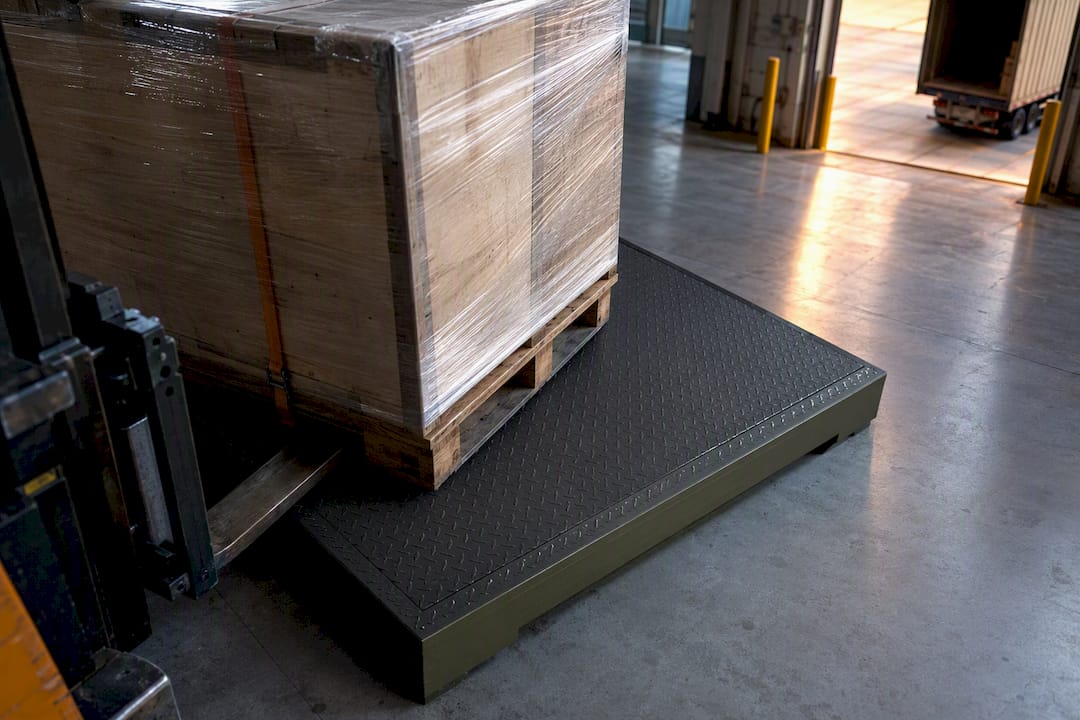
Most commercial pizza oven vendors offer free shipping to business addresses within the contiguous states, but that offer rarely covers everything. Residential deliveries usually pick up a liftgate fee, Alaska and Hawaii routes carry destination surcharges that may be several hundred dollars, and remote ZIP codes sometimes trigger extra charges after the order is placed. A firm number always needs a proper quote, built around the oven’s model, its packed pallet dimensions, and the exact delivery address.
TL;DR:
- Destination surcharges for non-contiguous states like Alaska and Hawaii can add between $200 and $500 or more, depending on the oven’s size and weight.
- Residential delivery often incurs additional fees, such as liftgate charges around $95, and may require white glove service, which considerably raises the total cost.
- Accurate quotes depend on detailed information including oven model, packed dimensions, pickup and delivery addresses, and access constraints like stairs or narrow pathways.
- Vendor policies vary on free shipping, with many only offering it for commercial addresses in the lower 48 states, and extra surcharges often revealed only after route assessment.
- Proper inspection, photographic evidence, and clarity on who files claims are essential if the oven sustains damage during transit to avoid unexpected costs.
Table of Contents
- How pizza oven shipping cost policies typically work
- What are the surcharges for Alaska, Hawaii, and remote areas?
- Residential vs commercial delivery: what changes the price
- How carriers calculate pizza oven freight charges
- Typical shipping cost ranges by oven type
- How do you get an accurate pizza oven shipping quote?
- Delivery timelines and what to do if there’s damage
- How Vesuviano Forni supports export and delivery logistics
- What buyers overlook when requesting a shipping quote
- Getting a shipping-inclusive quote for your oven
- Sources
How pizza oven shipping cost policies typically work
Vendor shipping pages tend to follow a predictable pattern once you have read a few of them. Free shipping is usually promised for commercial addresses in the lower 48 states, and the fine print does most of the real work.
Ooni, for instance, promotes free shipping on many orders but still asks buyers outside standard delivery zones to get in touch so the carrier can assess the route before quoting a final figure. That “we’ll be in touch” clause is common, and it means the advertised free shipping is a starting point rather than a guarantee for every postcode.
A few things worth checking on any vendor’s shipping page before you order:
- Whether the free shipping threshold applies to the oven itself or only to accessories (peels, covers, thermometers often have a lower, separate free shipping cut off)
- Whether Alaska, Hawaii, or “remote” ZIP codes are explicitly excluded from the free offer
- Whether the page distinguishes between commercial and residential delivery, and what happens if you tick the wrong box
- Whether extra charges are disclosed at checkout or only surface later, once a carrier has actually assessed the route
Accessory shipping often runs on a different rule entirely. Some brands offer free accessory shipping over a modest order value, while the oven itself ships under separate freight terms because of its weight and crating requirements. Reading the policy line by line, rather than skimming the headline “free shipping” banner, saves a nasty surprise at checkout.
What are the surcharges for Alaska, Hawaii, and remote areas?
Destination surcharges are where a lot of buyers get caught out, because the number depends heavily on the oven’s size and weight, not just its price tag.
Some vendors publish exact figures. One well known outdoor oven brand lists model specific surcharges for non contiguous states: larger Dome ovens carry a $500 fee to Alaska and Hawaii, mid sized Arc models add $350, and smaller units add around $200. Those figures give a useful sense of scale, even though every manufacturer sets its own rates.
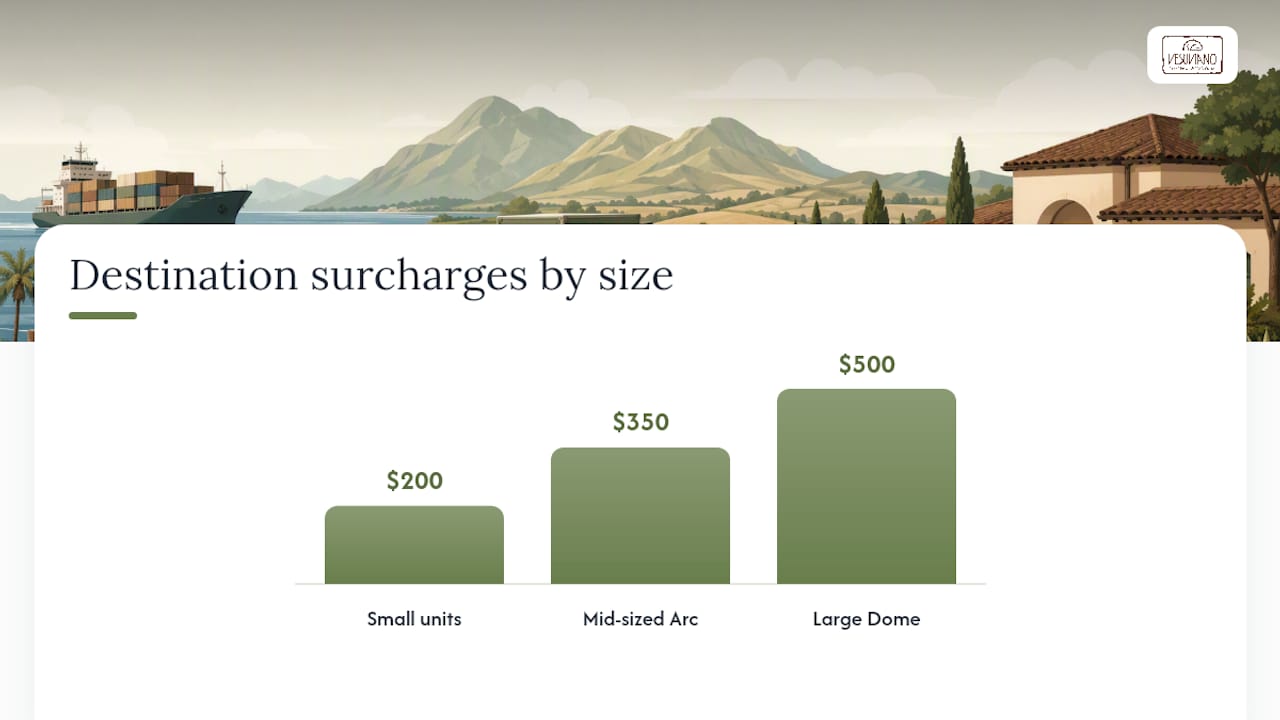
Statistic Callout: A commercial oven weighing several hundred pounds, freighted to a non-contiguous state, can add anywhere from $200 to $500 or more on top of the base shipping charge, purely for the destination itself.
Other patterns worth knowing:
- Rural ZIP codes in the contiguous states, particularly in mountain regions or areas served only by smaller regional carriers, can trigger “remote area” fees similar to those applied to Alaska and Hawaii.
- Some carriers apply these fees automatically at the point of booking; others only flag them once the freight has already left the warehouse.
- Vendors that cannot calculate a destination fee automatically will usually say so upfront and ask you to request a quote rather than guess and get it wrong.
Because these charges are set carrier by carrier and route by route, treat any number you see online as a guide, not a promise, until a vendor confirms it against your actual address.
Residential vs commercial delivery: what changes the price
The single biggest cost driver after destination is whether the delivery address is residential or commercial, because freight carriers price the two very differently.
- Curbside delivery drops the crated oven at the end of your driveway or loading area. The carrier is not obliged to bring it further, and you (or hired labour) handle the rest.
- Liftgate delivery adds a mechanical platform that lowers the pallet from the truck bed to ground level, which matters enormously for an oven that can weigh several hundred pounds. Many vendors charge a residential liftgate fee, often in the region of $95, on top of the base freight rate.
- White glove delivery brings the oven inside, unpacks it, and sometimes includes basic placement, at a noticeably higher price than curbside or liftgate service alone.
Commercial addresses with a loading dock and regular business hours are cheaper to serve, which is exactly why so many vendors reserve their free shipping offer for that category. Choosing the wrong delivery type at checkout, or failing to flag that an address is residential, is one of the most common reasons buyers see an unexpected charge added after booking.
Pro Tip: If your business doesn’t have a loading dock, ask about terminal pickup. Collecting the crate yourself from the freight terminal is often cheaper than paying for residential liftgate service, provided you have a way to move a heavy pallet once you get there.
How carriers calculate pizza oven freight charges
Freight pricing looks opaque from the outside, but it comes down to a handful of variables that every carrier weighs the same way.
Weight versus dimensional weight. Carriers charge on whichever is higher: the oven’s actual weight or its “dimensional weight,” calculated from the crate’s length, width, and height. A large but relatively light oven can still price like a heavy one once dimensional weight kicks in.
Freight class. Anything too large or heavy for standard parcel carriers moves as Less Than Truckload, or LTL, freight. LTL pricing runs on freight class, a system that accounts for density, handling difficulty, and value. A densely packed commercial oven on a sturdy pallet generally earns a better freight class, and a better rate, than an awkwardly shaped crate.
Incoterms. Terms like “FOB origin, freight prepaid and charged” define who owns the risk at each stage of transport. Under freight prepaid and charged terms, the seller arranges the carrier but bills the freight cost back to the buyer, and the practical detail that matters is who files a claim if the crate arrives damaged.
Data points that speed up an accurate quote include:
- Finished, crated weight in pounds
- Full pallet dimensions, including crate height, not just the oven’s own measurements
- Origin city and destination ZIP code
- Whether the delivery point is commercial or residential
Get these details right and a freight quote stops being a guess.
Typical shipping cost ranges by oven type
These figures are illustrative, meant to help with early budgeting, not a substitute for a firm quote against your specific address and oven.
- Small consumer style ovens shipped by parcel carrier: often free or a flat low fee, sometimes under $50, if they fall under a courier’s weight limit.
- Mid range commercial ovens shipped LTL within the contiguous states: commonly $200 to $800, depending on weight, crate size, and how far the destination sits from a major freight hub.
- Large professional ovens, particularly wood fired models with substantial masonry or refractory material: freight costs climb accordingly, and Alaska, Hawaii, or remote surcharges can add $200 to $1,000 or more on top.
Three quick scenarios show how much the same oven category can vary:
- A commercial pizzeria in a major lower 48 city, with a loading dock: often the closest to a genuine free shipping outcome.
- A residential backyard installation in the suburbs: base freight plus a liftgate fee, typically adding roughly $95 to $150.
- A restaurant in Alaska ordering the same model: base freight plus a destination surcharge that, going by published examples elsewhere in the market, can run into several hundred dollars.
Treat every one of these as a planning range. Actual quotes shift with pallet dimensions, origin warehouse, and the service level you choose.
How do you get an accurate pizza oven shipping quote?
Vendors and freight carriers work from the same short checklist, and giving them everything upfront is the fastest way to a number you can trust.
- Model name or SKU, so the vendor pulls the correct crated weight and dimensions.
- Finished, packed pallet dimensions, not just the oven’s own footprint.
- Pickup city and ZIP code, if you are arranging your own carrier.
- Full delivery address, including ZIP code and whether it is residential or commercial.
- A contact phone number, since most freight carriers call ahead to schedule delivery.
- Any installation needs, so the quote can include, or clearly exclude, that cost.
Access constraints matter more than most buyers expect. Note narrow streets that limit truck size, a lack of loading dock, stairs, or any distance the crate has to travel from the truck to its final position. Ask explicitly for an all inclusive quote covering customs duties, delivery, and installation if those apply, so the number you agree to is the number you actually pay.
Delivery timelines and what to do if there’s damage
For stock items shipped within the contiguous states, expect production lead time plus roughly two to ten days of transit once the oven leaves the warehouse. Custom or handcrafted ovens add build time on top, which is worth planning around if you are working to an opening date.
On arrival, a few habits protect you if something has gone wrong in transit:
- Inspect the crate before signing for delivery, and note any visible damage on the delivery receipt itself, not just verbally to the driver.
- Photograph damage from multiple angles before unpacking further, since carriers usually require this for a claim.
- Confirm who is responsible for filing a claim. This depends on the incoterms agreed at purchase, and it is worth knowing before the truck arrives rather than after.
Refusing or cancelling a shipment once it is in transit is rarely free. Many vendors state plainly that buyers can end up liable for round trip shipping, handling, and restocking fees if a delivery is refused without cause.
How Vesuviano Forni supports export and delivery logistics
Vesuviano Forni’s role goes beyond building the oven. Every export project typically includes technical consultancy, customs clearance, transport coordination, and on site assembly, often coordinated by a dedicated team from first quote to final installation.
That matters most on the cost side. Manufacturer led logistics can bundle customs duties and delivery into a single quote rather than leaving a buyer to coordinate a freight forwarder, a customs broker, and a local installer separately. Fewer parties involved generally means fewer places for an unexpected fee to appear. For anyone importing a pizza oven to the USA for the first time, that single point of accountability tends to matter as much as the headline price of the oven itself.
What buyers overlook when requesting a shipping quote

Three things catch buyers out more often than the freight rate itself. Access limitations top the list: a narrow gate, a flight of stairs, or a delivery address with no loading dock changes the entire cost of the last mile, and it is often mentioned only after the truck is already booked. Packed dimensions come second. Buyers frequently quote the oven’s finished size rather than its crated pallet size, which throws off freight class and price. Last mile services rank third: white glove delivery or a hired local rig can cost more than the long haul freight itself, yet buyers often treat it as an afterthought rather than budgeting for it upfront.
My advice before ordering: measure your access route with a tape measure, not a guess, confirm your delivery address type in writing, and ask for a quote that separates freight, surcharges, and installation as distinct line items. Reach out directly if your project needs a bespoke shipping plan rather than a standard one.
— Bruno - Key Account & Export Manager
Getting a shipping-inclusive quote for your oven
Some vendors handle the full export process in house, so a request for a quote can come back as one itemised figure covering the oven, freight, customs, and installation, rather than three separate estimates you have to reconcile yourself. That matters most for buyers who have already read a handful of vendor shipping pages and found the fine print inconsistent from one brand to the next.
A formal quote typically takes shape once a vendor has your oven model, delivery address, and any access notes for the installation site, mirroring the checklist covered above. From there, the team maps out production lead time alongside shipping and customs, so you can see one realistic delivery window rather than piecing timelines together yourself. Browse the Neapolitan pizza oven range to shortlist a model, or go straight to the commercial wood-fired oven collection if you already know the category you need, and request a quote that accounts for shipping from the outset.
Sources
- FAQs - Authentic Pizza Ovens Warranty, Delay Support …
- How much is delivery? – Gozney Help Center
- Pizzaovens