
CE vs UKCA for Commercial Pizza Ovens in the UK
CE or UKCA on a commercial pizza oven? What applies in Great Britain and Northern Ireland, how fuel type changes the rules, and what to ask for before you buy.
CE vs UKCA for Commercial Pizza Ovens in the UK
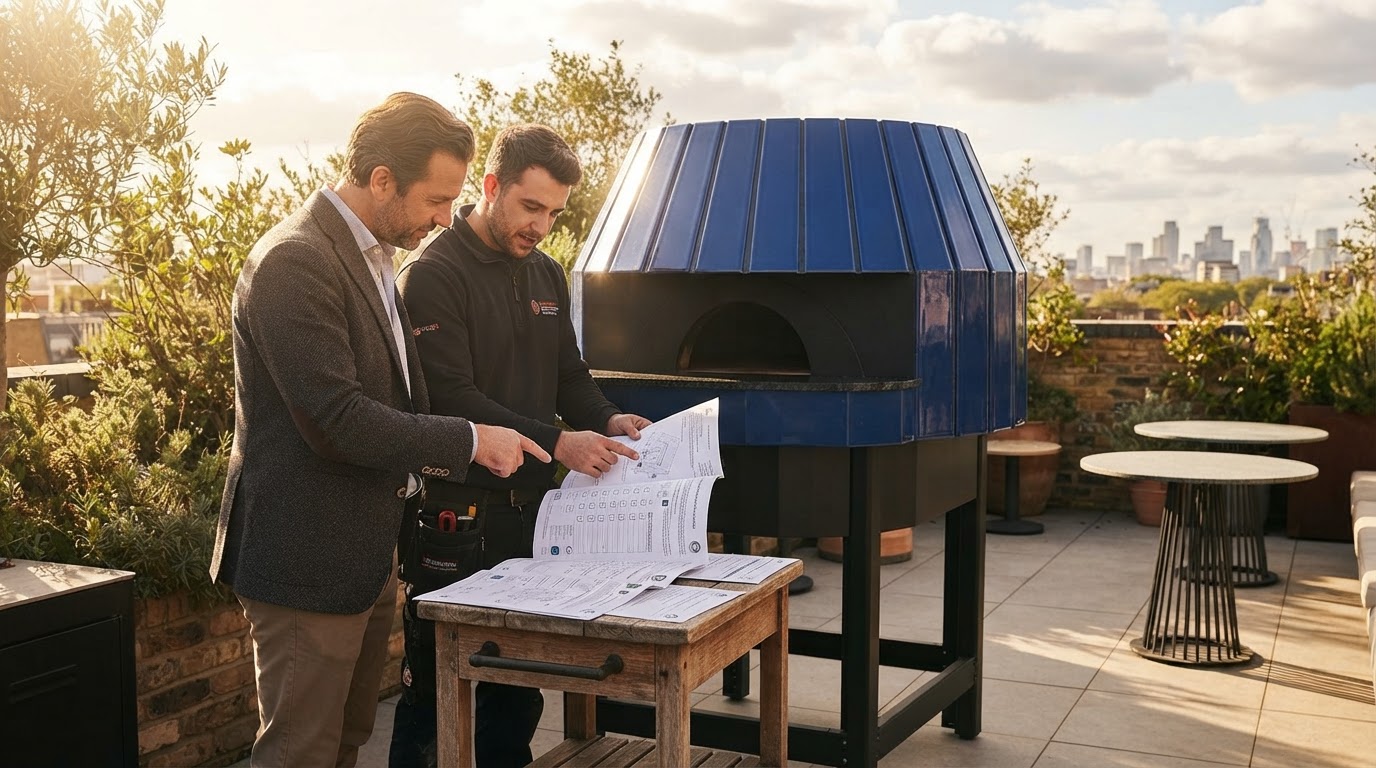
For a gas or electric commercial pizza oven placed on the Great Britain market, either a UKCA or a CE mark is accepted, and in Northern Ireland the oven needs CE (or UKNI and CE). Which rules apply depends on the fuel, and a wood-fired oven used only commercially follows a different path again. This guide sets out what each mark means, what your oven needs by fuel type, and what to have in hand before delivery, so that your Neapolitan oven is signed off the first time. If you are planning an oven from Naples for a UK site, our team can support the project from consultation to installation, so the paperwork is settled before the oven ships.
TL;DR
- Great Britain: gas appliances and electrical equipment can carry UKCA or CE. GOV.UK confirms that CE recognition continues from 1 October 2024.
- Northern Ireland: the requirement is CE, or UKNI and CE, because EU product rules still apply there under the Windsor Framework.
- The assessing body decides the mark: a UK Approved Body certifies for UKCA, an EU Notified Body for CE.
- Fuel matters: gas ovens need tested conformity, electric ovens follow the electrical equipment regulations, and solid-fuel ovens add smoke-control and extraction duties.
- Ask for the paperwork: a declaration of conformity and a technical file should exist for any oven in scope.
Table of Contents
- What the two marks mean
- Which mark applies where
- What your oven needs, fuel by fuel
- Documents to have before the oven ships
- Which mark should you ask for?
- How we approach it
- Plan your oven with our team
- FAQ
- Sources
What the two marks mean
Both marks are the manufacturer’s declaration that the product meets the product requirements that apply to it. UKCA stands for UK Conformity Assessed. CE stands for Conformité Européenne. GOV.UK’s guide to placing products on the market in Great Britain describes both as showing that the manufacturer believes the product meets the relevant requirements, and it confirms that the UK continues to recognise CE marking in Great Britain where the product requirements meet UK needs.
For a restaurant owner this means two things. First, the mark itself is not a quality award. It is a legal statement backed by testing, a technical file and a declaration of conformity. Second, the two marks are not rival standards: the technical requirements behind them are, for these product groups, largely the same, and the difference is mainly which market and which assessing body are involved.
Which mark applies where
The UK is two product markets, and your oven may be sold into either.
| Market | Gas appliances and electrical equipment | Why |
|---|---|---|
| England, Scotland, Wales | UKCA or CE | CE recognition continues, in force since 1 October 2024 |
| Northern Ireland | CE, or UKNI and CE | EU manufactured-product rules apply under the Windsor Framework |
| EU, from a GB-based business | CE | The EU does not accept UKCA |
The source for the first two rows is GOV.UK’s product regulations by sector table. The 2024 change itself was made by the Product Safety and Metrology etc. (Amendment) Regulations 2024, which came into force on 1 October 2024 and extend to England, Wales and Scotland. GOV.UK’s guidance on electrical equipment adds that GB-based businesses placing products on the EEA market still need CE marking.
For an international buyer, this is the practical advantage of an oven made in Europe. A CE-marked product can serve a group with a site in Manchester, another in Belfast and a third in Dublin, because the same mark is recognised across those markets. A UKCA-only product covers Great Britain and nothing else.
Why the choice of assessing body matters
The marks are not interchangeable at the testing stage. According to GOV.UK’s product safety guidance, an assessment by a UK Approved Body leads to UKCA marking, while an assessment by an EU Notified Body leads to CE marking. UK Approved Bodies are accredited by UKAS, the national accreditation body, and can certify only for UKCA. EU Notified Bodies certify against EU requirements, and that certification can also be used in Great Britain under CE recognition or the Fast-Track UKCA route.
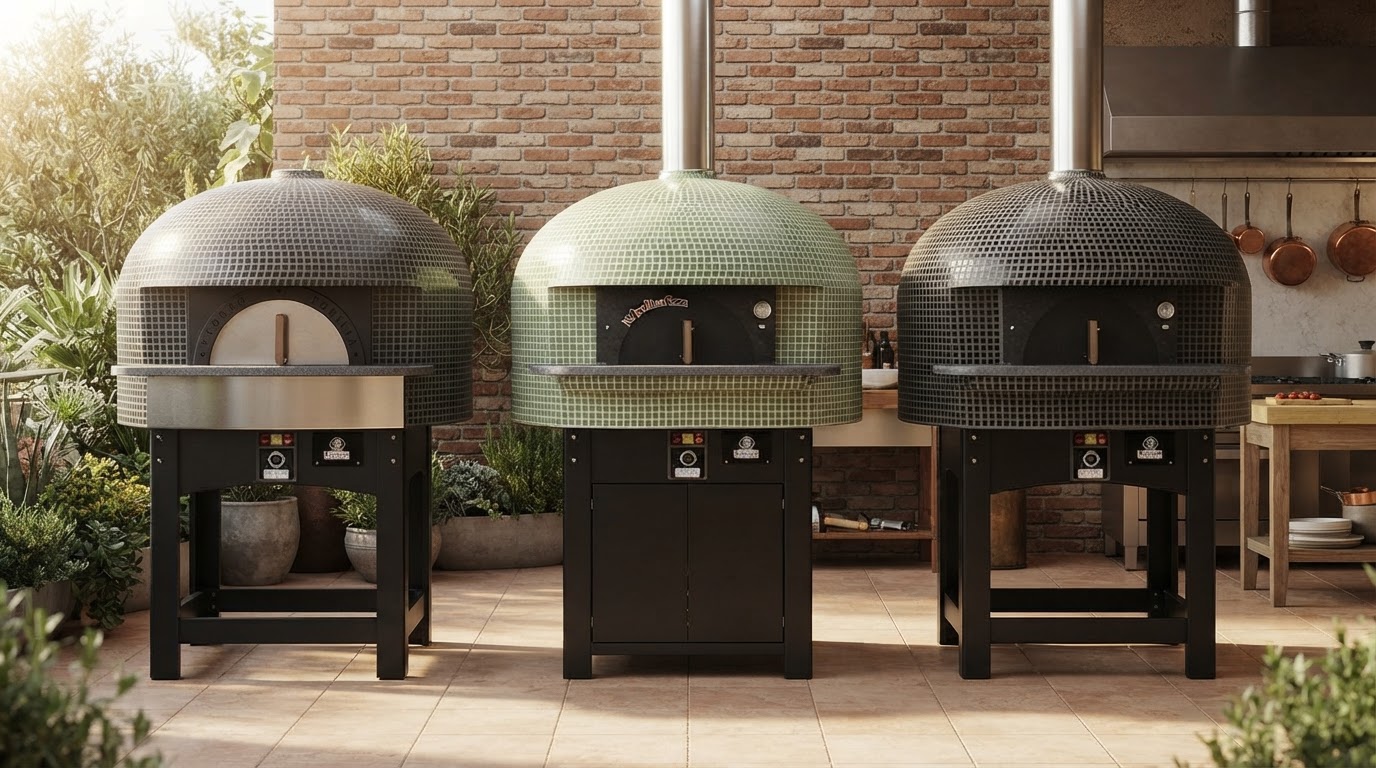
In plain terms: an oven assessed once in Europe can be placed on the GB market without a second round of testing in the UK. That saves time and cost on a project where the oven is built in Naples and shipped to you.
What your oven needs, fuel by fuel
The rules follow the energy source. Look at the fuel first, and the marking question mostly answers itself.
Gas ovens
Gas is the most tightly regulated route. Gas appliances fall under Regulation (EU) 2016/426, which was adopted into UK law. BSI’s gas appliance guide states that any gas-powered appliance for household or commercial use, including commercial catering ovens, must be tested, that BS EN 203-1 covers the safety of commercial catering gas appliances, and that both CE and UKCA require testing, a technical file and a declaration of conformity.
The UK version of the regulation sets out what follows from that:
- The manufacturer draws up the technical documentation and carries out the conformity assessment.
- The documentation and the declaration of conformity are kept for 10 years after the appliance is placed on the market.
- The mark is affixed visibly, legibly and indelibly before the oven is placed on the market.
- The mark is followed by the identification number of the approved body and the last two digits of the year.
When you are comparing commercial gas pizza ovens, the line that tells you the most is the one after the mark: a body number and a two-digit year show a third-party assessment sits behind it. Local authorities also expect it. Westminster City Council’s business guidance on gas safety says new gas appliances for commercial catering must be CE marked and that installation and commissioning must be carried out by a Gas Safe-registered engineer.
Our gas range, including commercial gas pizza ovens, is handcrafted in Naples. Gas supply pressure is the other detail your installer will check against the oven’s rating plate, and we cover it in our note on matching the plate to 37 mbar regulators and hoses.
Electric ovens
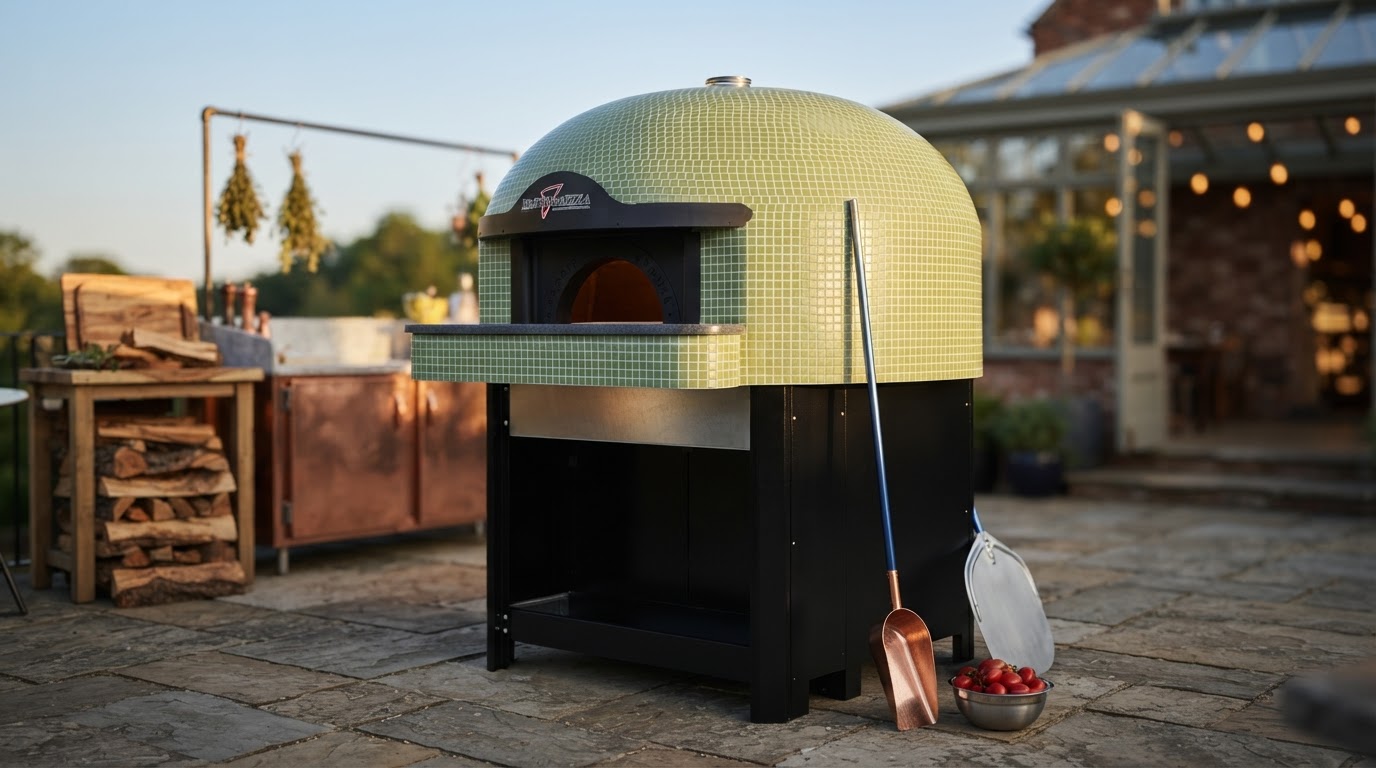
Electric ovens sit under the Electrical Equipment (Safety) Regulations 2016. GOV.UK’s sector table lists them with CE recognition continuing in Great Britain, and its self-declaration table allows self-declaration for all electrical equipment under the UKCA regime. That means the manufacturer can assess conformity itself, without a third-party body, though it must still hold a technical file and issue a declaration of conformity.
If you are weighing an electric oven for a hotel, food hall or site without a gas supply, our electric oven range is where to start, and our guide to commercial electric oven regulations in the UK goes deeper on the electrical side.
Wood-fired ovens
Wood-fired ovens are where operators most often assume the wrong thing. A case study on a commercial wood-burning pizza oven found that a wood-fired oven used only in commercial environments falls outside the scope of the CE marking directives and, because it is not a consumer product, outside the General Product Safety Directive. The gas-fired version of the same oven, by contrast, fell under the gas appliances directive and needed a Notified Body.
So a wood-fired oven for a restaurant does not usually come with a CE or UKCA conformity route of the gas kind. The duties that matter for you sit elsewhere:
- Smoke control areas. HETAS application guidance, published on GOV.UK, says solid-fuel pizza ovens need an exemption to be used in a smoke control area when burning a non-authorised fuel. For non-standard pizza ovens, HETAS generally requires one ignition test, at least two warm-up tests and five tests at the defined stable operating temperature, with that temperature defined in the manual.
- Extraction. Westminster’s guidance says extraction systems for commercial solid fuel appliances such as wood-fired pizza ovens must be thoroughly examined and tested at least once every 14 months.
- Your local environmental health team. They decide on the ground what your site needs, so involve them early in the drawings.
Our commercial wood-fired pizza ovens are built by hand in Naples. For low-emission, soot-free solutions, our research and development team works on exactly this part of the problem, which is where smoke control areas are concerned.
Documents to have before the oven ships
Whatever the fuel, a sound purchase leaves a paper trail. GOV.UK’s guide describes the two core documents.
The technical file holds the test reports, design documents, risk assessments and any sector-specified information. It is usually digital.
The declaration of conformity includes:
- the manufacturer’s name and address;
- the product’s model or serial identification;
- a statement of compliance;
- approved-body details, where one was involved;
- the legislation and standards it refers to;
- the signatory and date.
The mark itself must be at least 5 mm high, easily visible, legible and indelible. A product can carry more than one mark, for example UKCA and CE, if it meets all the requirements for each.
A short checklist for your purchase file:
- The declaration of conformity, matched to the oven’s model and serial number.
- The marking on the rating plate, with the approved-body number and year for gas.
- The installation and operating manual, which for solid-fuel ovens also carries the defined operating temperature used in smoke control testing.
- The installer’s Gas Safe details for any gas connection.
- For wood-fired ovens in a smoke control area, the exemption status, and the extraction test record.
For the wider picture of what an inspector looks at once the oven is in the kitchen, our installation guide on the four compliance pillars and our six-step UKCA checklist for pizza ovens are written for operators.
Which mark should you ask for?
A simple decision path for most UK buyers:
- One site in England, Scotland or Wales. Either mark is accepted for gas and electric. Choose on the strength of the documentation, not the letters.
- Any site in Northern Ireland. Require CE, or UKNI and CE.
- A group with sites across the UK and the EU. CE gives you one mark for all of them, since the EU does not recognise UKCA.
- A wood-fired oven. Concentrate on smoke control, extraction and installation rather than on the mark.
The rules change from time to time. GOV.UK ran a consultation, which closed on 20 January 2026, on continuing CE recognition under the new Ecodesign for Sustainable Products Regulation framework. Check GOV.UK’s sector table for the current position before you sign.
How we approach it
Most oven buyers come to us with the right question, which is what will be signed off on site, and the wrong assumption, which is that one mark answers it. In practice a UK pizzeria opening is a sequence: the fuel decides the rules, the rules decide the documents, and the documents decide how smoothly the installer and the inspector get through the day.
Our ovens are handcrafted in Naples by artisans who bring over 50 years of know-how in building professional pizza ovens, and we pair that tradition with engineers and technical experts. We build wood-fired, gas, electric and rotating versions, so the fuel conversation happens with one team and not several.
We support international projects from consultation to installation, with on-site construction, technical consultancy and after-sales support. For a UK operator, that means the question of which oven suits your fuel, your site and your market can be settled at the start, while the design is still open.
Our team is at your disposal.
Bruno - Key Account & Export Manager
Plan your oven with our team
Vesuviano Forni brings together Neapolitan artisans to build professional ovens for pizzerias, restaurants, hotels and food halls worldwide. Our range covers three families, Anastasia, Real Bosco and Sebastian, along with the VesuvioBuono system and on-site construction for projects that call for a bespoke build. You can see the range on our collections page, or look at our international services for consultancy and logistics.
Tell us the fuel, the site and the market it is going into, and we will talk you through the oven and the project. Start from our main site.
FAQ
Does the UK still accept CE marking on commercial ovens?
Yes, in Great Britain, for gas appliances and electrical equipment. GOV.UK says legislation in force from 1 October 2024 continues recognition of CE marking, so you can choose UKCA or CE. In Northern Ireland, CE (or UKNI and CE) is the requirement.
What is the UK equivalent of the CE mark?
UKCA, which stands for UK Conformity Assessed, applies in England, Scotland and Wales. It is not valid in the EU, so a business selling into both the UK and the EU needs CE for the EU side.
Does a wood-fired pizza oven need CE or UKCA marking?
Not in the same way as a gas oven. A wood-fired oven used only in commercial settings can fall outside the CE directives and the General Product Safety Directive. Smoke control exemptions, extraction testing and installation requirements still apply, so speak to your local environmental health team early.
Can I hold both UKCA and CE on one oven?
Yes. GOV.UK says multiple marks may be used if the product meets all the requirements for each. For a gas oven, the mark must be followed by the approved body’s identification number and the last two digits of the year.
How long should the paperwork be kept?
For gas appliances, UK Regulation 2016/426 requires the technical documentation and declaration of conformity to be kept for 10 years after the appliance is placed on the market. That duty sits with the manufacturer, but keeping your own copy in the site file makes inspections simpler.
Sources
- Placing UKCA or CE marked products on the market in Great Britain, GOV.UK
- Product regulations by sector and current approaches to product marking, GOV.UK
- Product safety law: advice for manufacturers and importers, GOV.UK
- Electrical Equipment (Safety) Regulations 2016: Great Britain, GOV.UK
- The Product Safety and Metrology etc. (Amendment) Regulations 2024, legislation.gov.uk
- Regulation (EU) 2016/426 as it applies in Great Britain, legislation.gov.uk
- Gas Appliance Testing and Certification guide, BSI
- Application Guidance: Appliance Exemption, HETAS
- Gas safety and liquefied petroleum gas (LPG), Westminster City Council
- General Product Safety Case Study: commercial pizza oven, CE Marking Association
Recommended
Need a professional oven?
Discover our range of Neapolitan artisan ovens, handcrafted in our workshop at the foot of Vesuvius.
Discover our ovens